Now that all of the major players (Baseball Prospectus, FanGraphs, MLB Pipeline and Baseball America) have weighed in with their Astros Top Prospect Lists, I've integrated all of the rankings into one consensus top prospect ranking that includes 32 Astros players (16 were ranked on all four lists, nine were on three of four and the final seven were on two of four). I highly recommend checking out the included links for all of the great information provided.
Although I have covered over 130 players in these posts, there will be someone in the system who will emerge seemingly from nowhere to wow us. That is the beauty of baseball. Everyone from the number one pick to the 40th draft pick to the Rule 5 draft pick to the non-drafted free agent to the top international prospect to the undersized Venezuelan kid who signed for $15,000 -- all of them get the chance to put on a uniform and show us what they can do. Some will outperform their talent by sheer force of will and work ethic. And some top talents will slowly fade away. It can be enthralling to watch an underdog succeed and it can be heartbreaking to see a favorite prospect fail. But watching that journey is a blast.
[UPDATES TO FINAL 2018 PRE-SEASON RANKINGS SHOWN IN RED.
BA= BASEBALL AMERICA, BP = BASEBALL PROSPECTUS,
FG=FANGRAPHS, MLB = MLB PIPELINE]
Note: Although I included all of the left-handed pitchers in my previous post, I will be dividing the right-handers into relievers and starters due to the sheer number of pitchers I am covering. Those listed as starters are either currently being used primarily in that role or appear to be headed in that direction.
RIGHT-HANDED STARTERS IN THE TOP 30 (in alphabetical order)

Hector Pérez - July 2016
Photo by Jayne Hansen
Jorge Alcala - MLB #7, BA #8, FG #14
Alcala didn't sign with the Astros until he was 18. Now 22, the flame-throwing right-hander has come a long way, but reportedly still has some work to do in refining his control and command. Along with a mid to high 90's fastball that touches up to 102 (and is said to be an 80 by FanGraphs on the 20-80 scale), Alcala features a slider that is characterized as inconsistent and a changeup that is a work in progress. MLB Pipeline, who also notes that Alcala has a curveball in his repertoire, is higher on Alcala's breaking pitches than some of the other sources. In any event, Alcala will need to fine-tune both his pitch repertoire and his command of those pitches to remain in the rotation. But an 80 fastball will definitely play up in the 'pen if he goes that route. Alcala started his 2017 season in Low A Quad Cities, but soon earned a promotion to High A Buies Creek in mid-May. In a total of 22 appearances (18 starts), he had a 3.05 ERA and a 1.061 WHIP, walking 45 and striking out 95 in 109.1 innings. He will be 23 in July.
Rogelio Armenteros - BP #5, FG #11, BA #12, MLB #12
Armenteros was ranked higher by Baseball Prospectus (#5) than the other outlets (#11 from FanGraphs and #12 from MLB Pipeline and Baseball America) primarily because BP placed a higher value on Armenteros deception, ability to throw five pitches for strikes and ability to locate to either side of the plate. And, although, Forrest Whitley is considered a much more elite prospect, Armenteros was WTHB's 2017 Pitcher of the Year due to his sheer dominance and present results. At the time I wrote:
There were a number of very good pitching performances in the Astros minor league system in 2017, but no one was quite as dominant as Rogelio Armenteros. Armenteros split his season between Corpus Christi and Fresno and compiled a 10-4 record with a 2.04 ERA, a 1.043 WHIP and 38 walks to 146 strikeouts in 123.2 innings. His stats were almost identical at the two levels with the main difference being an astonishing 8-1 record in his 10 starts at the higher level.In any event, his plus change up, plus control/command and overall pitchability have most pundits agreeing that Armenteros has very little left to prove in the minors and should be able to contribute as a back of the rotation starter in Houston whenever he is needed. Originally from Cuba, Armenteros was signed by the Astros in September 2014 and he will be 24 in June.
Brandon Bailey - FG #18, MLB #30
Bailey, acquired in a November 2017 trade with Oakland for OF Ramon Laureano, squeaked on to the prospect list with a #18 ranking from FanGraphs and a #30 out of 30 from MLB Pipeline while Baseball America and Baseball Prospectus remained agnostic. Originally drafted by Oakland in the sixth round in 2016 out of Gonzaga, Bailey split his 2017 season between the Low A Midwest League and the High A California League, compiling a 3.26 ERA and a 1.088 WHIP with 31 walks to 120 strikeouts in 91 innings. Bailey features a low 90's fastball which MLB Pipeline likes for its "riding life" (FG calls it "flat-planed" so I suppose it depends on who you talk to), a plus change up, an above average curveball and a slider that FanGraphs calls "fringy." Most think that he will ultimately end up in the bullpen due to his smaller stature and the effort in his delivery. Bailey will be 24 in October.
J.B. Bukauskas - BP #3, MLB #3, BA #4, FG #4
Although there is some concern about his durability and high effort delivery, there is no question among scouts that Bukauskas has the stuff to make the big leagues. If he can develop his rarely used changeup and refine his fastball command, he is expected to become a #3 starter. If he can't, his plus-plus fastball and slider will serve him well in late-inning relief. The Astros have every intention of developing Bukauskas as a starter, but his back-up plan makes him a valuable prospect for the organization. He is ranked either the #3 or #4 top prospect in the organization in the referenced rankings. Drafted 15th overall in the first round of the draft in 2017 out of the University of North Carolina at Chapel Hill, Bukauskas only pitched 10 innings in his inaugural season, one outing with the rookie level Gulf Coast League and two with short season Tri-City. He will be 22 in October.
Cristian Javier - MLB #19, BA #25, FG #28+
Signed out of the Dominican Republic in March 2015, Javier spent the majority of his season with Low A Quad Cities where he was 1-0 in two postseason starts, helping propel the River Bandits to the Midwest League Championship. For the season, he was 3-0 with one save, a 2.25 ERA, 1.083 WHIP and 27 walks to 80 strikeouts in 60 innings. His solid season reflects the progress that he has made with all of his pitches, but can be attributed as much to his poise and savvy on the mound as his pitch repertoire. Javier features a high 80's to low 90's fastball with late life, a curveball and slider that flash plus and a change up that lags behind the others, but shows signs of improvement. Since he has yet to pitch more than 60 innings in his three pro seasons, he will need to be stretched out to eat up more innings if he is to remain in the rotation, but some project his stuff as playing up in relief. His highest ranking was from MLB Pipeline who had him at #19 going into the 2018 season. Javier turned 21 earlier this week.
Corbin Martin - FG #8, BP #10, MLB #10, BA #16
Martin, drafted in the second round in 2017 out of Texas A&M (as compensation for those cheatin' Cardinals) was ranked as high as #8 (FanGraphs) and as low as #16 (Baseball America), with a couple of 10's thrown in, going in to the 2018 season. Unfortunately, these guys are all over the map when it comes to discussing his offspeed offerings, but they all seem to agree that Martin's fastball is a quality low to mid-90's offering (although Baseball Prospectus thinks it plays down due to fringy command and lack of movement) that will bump up in velocity in the 'pen. His curveball, according to these sources, either projects plus-plus (MLB Pipeline), flashes plus (Baseball Prospectus), is behind his slider (Baseball America) or isn't even mentioned (FanGraphs). The projections on his slider and change up are similarly confusing. Hopefully, I will catch up with Martin during the season and find out for myself! In any event, most think that fine-tuning his command/control will be key to staying in the rotation where he is projected to be a #3 or #4 starter. In his first season, Martin made his first appearance with Tri-City before missing two weeks and then heading to the Gulf Coast League for two outings (possible injury?) before returning to Tri-City to finish out his season. Overall, he had a 2.20 ERA and 0.888 WHIP, allowing nine walks to 43 strikeouts and a .174 batting average in 32.2 innings. Martin just turned 22 in late December.
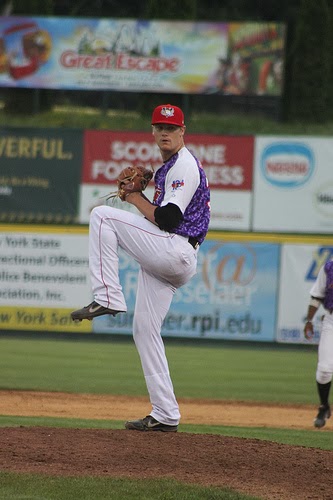
Hector Pérez - FG #5, BA #7, MLB #11, BP #11+
If Pérez can figure out how to time his delivery in order to produce more consistent results, he could be a dominant top of the rotation starter, but based on his 2017 season, that is a big "if." Ranked as high as #5 by FanGraphs, Pérez's electric fastball sits in the mid-90's, touches 98 or 99 and projects as a plus-plus pitch. His curveball, slider and split-change should all be plus major league pitches as well. The only question is whether or not Pérez can find the strike zone with all of his offerings on a more consistent basis. Pérez signed out of the Dominican Republic in July 2014 and in his third professional season in 2017, Pérez had a 3.44 ERA, a 1.453 WHIP and 78 walks to 128 strikeouts in 107.1 innings between Low A Quad Cities and High A Buies Creek. Obviously, that high walk rate will need to be tamed, but his incredible talent dictates that the Astros will give Pérez every opportunity to figure it out. He will be 22 in early June.
Jairo Solis - BA #6, BP #11+, FG #12, MLB #13
Solis is at the opposite end of the spectrum from Pérez when it comes to command and the ability to throw strikes, and what he did in his first professional season at the ripe old age of 17 is nothing short of remarkable. Solis blew through three levels, ending his season with rookie level Greeneville. He combined for a 2.64 ERA and a 1.174 WHIP with 21 walks to 69 strikeouts in 61.1 innings. Since signing out of Venezuela in July 2016 for $450,000, Solis added a few ticks to his fastball (low to mid-90's, touching 96) and could add even more as he continues to develop physically. But, honestly, with his great pitchability, clean mechanics and late life on his fastball, the added velo would just be gravy. He also throws a slider that shows promise as a plus offering and has a good feel for his changeup. Solis was ranked as high as #6 by Baseball America going into the 2018 season, and he just turned 18 in December. Be still, my heart!
Forrest Whitley - BA #1, BP #1, FG #1, MLB #1
Honestly, there is zero point in me offering a big write up on Whitley because he has been written up by every prospect pundit in the industry, all of whom have ranked him the number one prospect in the Astros organization. But I will tell you this. Yes, he is legit. Yes, he screwed up (50-game suspension for a positive test for an undisclosed banned substance). Yes, he will learn from the experience, keep his head down and move on (if he doesn't and it happens again, feel free to pull out the pitchforks and torches). Yes, his season is delayed. But he's going to be very, very good and you will like him very, very much.
I keep saying it. Wouldn't shock me if Forrest Whitley is the best pitcher of the 2020s. His to-do list is largely "stay healthy, pitch innings." Need to add pitches? Nope. Miss more bats? Nope. Develop control? Done.— JJ Cooper (@jjcoop36) February 10, 2018
RIGHT-HANDED STARTERS BEYOND THE TOP 30 (in alphabetical order)

Yohan Ramírez - July 2017
Photo by Jayne Hansen
Drafted out of Notre Dame in the 11th round in 2017, Bielak impressed in his first professional season, going 2-1 with one save, a 0.80 ERA and a 0.772 WHIP in 10 appearances between the rookie level Gulf Coast League and short season A Tri-City. In 33.2 innings, he walked five while striking out 42. Bielak is said to have a low 90's fastball with good sink, along with a curveball and changeup that are projected as average to a tick above average. Most pundits see Bielak in an eventual middle relief role, but if he even comes close to holding hitters to a .174/.206/.198 line as he did in 2017, his pitchability could keep him in the rotation mix. He will be 22 on Monday.
Keys: Keep missing bats and developing his offspeed.
Akeem Bostick
Bostick was drafted by the Rangers out of his Florence, South Carolina high school in 2013 and was ranked #11 in the Rangers system going in to the 2014 season. Unfortunately, his road up through the minors had a few bumps and those continued following his January 2015 trade to the Astros for Carlos Corporan. There were more ups and downs following his promotion to AA Corpus Christi in late April last season, but Bostick ended it on a good note as the Texas League Pitcher of the Week for the final week of the season. Overall, he had a 4.06 ERA and a 1.334 WHIP with 26 walks to 74 strikeouts in 99.2 innings. Bostick has a solid pitch repertoire but has been somewhat inconsistent in his delivery, in how the ball comes out of his hand. That inconsistency has led to Bostick getting hit hard at times. After a pretty solid winter season in Mexico, Bostick will be looking to prove himself as he heads into his sixth pro season.
Key: Consistency!!!
Humberto Castellanos
In his second professional season, Castellanos made three relief appearances with Tri-City before ending up in rookie league Greeneville for the bulk of the season. That does not appear to have been a demotion (considering he was lights out in Tri-City), but rather an opportunity to get Castellanos more innings and a chance to start. Whatever the reason, he had a very nice season, going 6-1 with a 2.35 ERA, a 1.152 WHIP and nine walks to 40 strikeouts in his 46 innings (and he provided three scoreless innings in his one postseason appearance). When he was first signed out of Mexico in 2015, Baseball America found him to be impressive for his age with outstanding control and a fastball in the low 90's. Castellanos will be 20 in early April.
Key: Build on his early success. I'd like to see him continue in a starting rotation, but with so many talented pitchers leading to a relative dearth of open rotation spots, he may need to overperform to claim one.
José Luis Hernández
Hernández, not to be confused with José Antonio (below), was signed by the Astros out of Mexico in March of 2015. After putting up a very impressive 2.94 ERA and 1.189 WHIP in 125.1 innings (24BB:127SO) between Low A Quad Cities and High A Lancaster in 2016, Hernández sat out 2017 on the DL. (I don't know the nature of his injury.) Prior to the injury, Hernández was said to feature a high 80's to low 90's fastball, curveball, slider and a changeup with fade (Baseball America). I hope to see Hernández back in the saddle in 2017. He will be 23 in May.
Keys: Get (and stay) healthy and miss a few more bats (9 hits per 9 innings in 2016).
Tyler Ivey - FG #27
Ivey got some love from FanGraphs as they ranked him #27 in the Astros system, but he was pretty much ignored by the other prospect pundits, probably due to his lackluster debut. Drafted in the 3rd round in 2017 out of Grayson County College (TX), Ivey spent the vast majority of his inaugural season with short season A Tri-City, compiling a less than spectacular 5.63 ERA and 1.461 WHIP with 14 walks to 44 strikeouts in 38.1 innings. But his improvement to a 2.70 ERA and 1.100 WHIP over his last five appearances (20 innings), along with his workhorse reputation (120 innings in his final year in college), low 90's fastball that touches 95 and plus curveball have me looking for a better overall season in 2018. Ivey will be 22 in May.
Key: Ivey is going to have to miss a whole lot more bats. Overall, he did better in this regard later in the season, but he will have to be more consistent.
Josh James
I have long been a fan of James. He works hard, has a great pitcher's build and is aggressive on the mound. His 2017 season with AA Corpus Christi was a tale of two seasons. From April through July, James had a 2.81 ERA and a 1.203 WHIP in 67.1 innings and he earned a Texas League All-Star nod. Then, after missing the first two weeks of August, James only managed 8.2 innings over his final four appearances, going 0-4 with a 16.62 ERA and a 3.461 WHIP. It doesn't take a "rocket surgeon" to see that something was amiss with Mr. James at the end of the season. I don't have any recent notes regarding James's pitch repertoire, but I previously had him with a low to mid-90's fastball and a plus slider that may play up in a move to the bullpen. James, who was drafted in the 34th round in 2014 out of Western Oklahoma State College, recently turned 25 earlier this month.
Key: I honestly think that in this pitching-rich Astros organization, James's best opportunity may be a move to the bullpen. If that happens, as I think it may, he will need to embrace that opportunity.
Carson LaRue
LaRue continues to surprise me. He has a slight build and doesn't look like a workhorse, someone who would throw in the low-90's up to 94 or so, but he does just that. Aside from the fastball that he locates well, LaRue mixes in a plus slider as well as a curveball and changeup that he is working to fine-tune. LaRue spent the vast majority of his 2017 season with the Low A Quad Cities squad, going 12-4 with one save, a 2.86 ERA and a 1.033 WHIP in 20 appearances before his mid-August promotion to High A Buies Creek which didn't go quite as swimmingly (5.12 ERA, 1.655 WHIP in four games). For the season, he pitched 120 innings, fourth most in the Astros minor league system. Drafted out of Cowley County Community College (KS) in the 14th round in 2016, LaRue just turned 22 earlier this month.
Keys: Keep showing good consistency and the ability to locate and mix pitches well. And keep making incremental improvements with the off-speed repertoire. And do all of that while steadily climbing the ladder through the system. Easy breezy!
Ángel Macuare
When Macuare signed for $695,000 out of Venezuela in July 2016 (ranked #40 by Baseball America in the 2016 international class), Oz Ocampo of the Astros praised Macuare's solid command and feel for pitching, projecting him to have two plus pitches with a low to mid-90's fastball and a hard curveball that generates a lot of swing-and-miss. His first professional season in the Dominican Summer League wasn't exactly impressive, but wasn't disastrous either (4.85 ERA, 1.618 WHIP, 16BB:36SO, 29.2 IP). And considering he just turned 18 on March 3rd, I will definitely be keeping an eye on him.
Ángel Ortega
Another Ángel who signed out of Venezuela in July 2016, this Ángel didn't get quite as big a payday as the last one, signing for "only" $180,000. At the time of his signing, Ortega was said (by Oz Ocampo) to have advanced pitchability and command for his age, featuring a high 80's fastball, as well as a change up and curveball that he can throw for strikes. He lived up to that good assessment in 2017 in the Dominican Summer League where he had a 1.54 ERA and a 0.986 WHIP in 23.1 innings and held batters to a .145 average. Definitely a small sample size and he only made two starts, but he was being stretched out in the latter part of the season. In any event, pretty good for a 17-year old who just turned 18 in November.
Enoli Paredes
Paredes, unfortunately, went on the DL in early June last season for undisclosed reasons after an eye-popping start with Low A Quad Cities that resulted in his Midwest League All-Star nod. In eight games (six starts) for the River Bandits, he had a 2.11 ERA and a 0.887 WHIP in 38.1 innings, holding hitters to a .163 batting average. That is made all the more remarkable by the fact that 2017 was only his second season and he made the leap directly from the Gulf Coast League, bypassing Greeneville and Tri-City altogether. I know very little about Paredes, but at the time of his October 2015 signing out of the Dominican Republic, Baseball America noted a 94 mph fastball, hard curveball, changeup with sink and "bouncy" athleticism.
Key: Get healthy and pick up where he left off!
Yoanys Quiala
Quiala's transition to AA Corpus Christi following his mid-June promotion from High A Buies Creek didn't always go smoothly, but he seemed to have pretty much tamed the beast by season's end. Cumulatively, Quiala had a very nice 2.55 ERA and a 1.180 WHIP in 108.2 innings. He walked 24 and struck out 92. Prior to his signing in June 2015, the Cuban native was said by Baseball America to feature a 90-95 fastball, touching 97 and a plus slider with late bite, to go along with a changeup and splitter. One thing I've noticed about the Cuban contingent is the extreme work ethic from most. After seeing Quiala in Quad Cities in 2016, I hardly recognized him when I saw him next in August 2017. He had transformed himself, easily losing 25 pounds or more, and adding a lot of muscle. I would not bet against the 2017 Carolina League All-Star as he keeps progressing through the system.
Key: Keep the hits under control. Quiala allowed a highly elevated hit rate when he was first promoted to Corpus Christi. He had it under control by the end of the season, though, and kept the walks under control throughout.
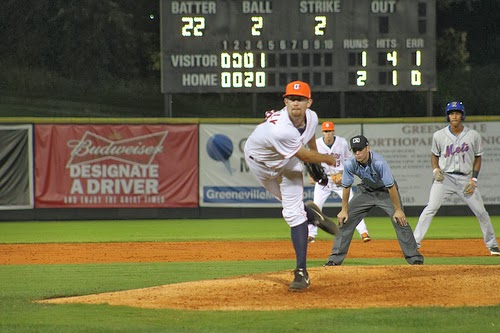
Yohan Ramírez
Ramírez is another player, like Paredes, who jumped from the Gulf Coast League in his first season to Low A Quad Cities in his second in 2017, but not before making three very successful spot starts at High A Buies Creek and AA Corpus Christi first (which tells me that the Astros like him very much!). Ramírez started off the season very well; in his first 11 appearances, he had a 2.47 ERA and a 1.237 WHIP in 43.2 innings, holding batters to a .201 average. But in his last nine regular season appearances, that ballooned to a 7.67 ERA and 1.863 WHIP (.303 BA) in 31.2 innings. His season may have been uneven, but with electric stuff that he can crank up to 98 or 99, you will be well served to keep an eye on him. 2017 Quad Cities Manager Russ Steinhorn said that Ramírez reminds him of Jandel Gustave -- the same kind of build with a quick arm, throwing hard with a good slider. I think Ramírez may open some eyes in 2018, but may ultimately land in a bullpen role. He will be 23 in May.
Key: Keep more guys off base more consistently.
Elian Rodríguez - BA #29
The Cuban-born Rodríguez did appear on one of the top prospect lists, at #29 out of #30 in Baseball America's Prospect Handbook. But others have backed away from him due to the poor control that resulted in a 7.46 ERA, 2.211 WHIP and 30 walks to 19 strikeouts in 25.1 innings in his first season with the Dominican Summer League. He's a hard thrower with a fastball that tops out at 97 and a hard slider. He also has a good pitcher's build and plus athleticism, but MLB Pipeline noted that he is "more power than polish" as they dropped him off their top list for Astros prospects going in to the 2018 season. Signed in June 2017 for $2,000,000, Rodríguez turned 21 earlier this month.
Key: Right now, his future development hinges on just one thing. Throw strikes!!
Matt Ruppenthal
Drafted in the 17th round in 2017 out of Vanderbilt, Ruppenthal had a nice freshman season, going 2-1 with a 3.04 ERA and a 1.394 WHIP in 23.2 innings with short season A Tri-City. He walked only eight batters while striking out 29, but the 9.5 hits per nine innings was less than optimal. He did improve in that regard, however, allowing a .314 batting average in July, but only a .237 average in August. Although Ruppenthal was a reliever at Vanderbilt, the Astros had him start all but one of his outings in 2017. At the time of the draft, Baseball America touted his plus curveball, a fastball that he can deliver at 94 to 95 (but locates better a notch or two lower) and a changeup that he will need to develop to stay in the rotation. Ruppenthal will be 23 in October.
Keys: Keep developing his pitch repertoire and (stop me if you've heard this before) miss more bats!
Heitor Tokar
Although it is highly unlikely that I will get the opportunity to see Tokar until 2019 at the very earliest, I can't wait! Tokar, who only turned 17 in October, signed out of Brazil in July for $300,000. Baseball America had him as the #50 overall top prospect in the 2017 international class and called him an "enormous pitcher with a heavy build," an apt descriptor for a 6'7" 250# pitcher (and that was when he was still 16!). Oz Ocampo of the Astros projects Tokar as a power starter with a fastball that is currently in the high 80's to low 90's, a solid changeup and two breaking pitches (curveball and slider) that he can throw for strikes. He is also said to have a nice repeatable delivery and advanced pitchability for his age. I expect him to start his season in the Dominican Summer League more due to his age than anything else.
Others to Watch (in alphabetical order):
Ronel Blanco
Blanco is an older prospect who will be 25 in August, but has only two professional seasons under his belt. After spending the majority of his 2016 season in the Dominican Summer League, he skipped ahead to Low A Quad Cities where he made all but one of his 2017 appearances. That is a big jump and Blanco had mixed results, but was improving late in the season, including collecting a career-high 10 strikeouts in his 6.2 inning championship-clinching postseason win over Fort Wayne. The bad news is that Blanco sees A LOT of traffic. He will have to rein in the walks and miss a whole lot more bats. Look for the Astros to continue moving him aggressively.
Jose Bravo
Bravo signed with the Astros out of Mexico in July 2016 and had a nice inaugural season in 2016 in the Dominican Summer League (2.90 ERA, 1.258 WHIP, 2BB:25SO, 31IP) as a 19-year old, but then sat out the entire 2017 season (which often means TJ surgery, but I don't have any confirmation of that). Bravo will be 21 in June and I'll be keeping an eye out for him to see what he does.
Chad Donato
Although Donato was drafted in the 11th round in 2016 out of West Virginia University, he didn't make his professional debut until July 2017, just over a year after undergoing Tommy John surgery. Through six appearances with the Gulf Coast League and four appearances with rookie level Greeneville, he had a solid season with a 2.78 ERA, a 1.330 WHIP and 13 walks to 44 strikeouts in 32.1 innings. Prior to the injury, Donato was said to have a low 90's fastball and a plus curveball with good depth. A few months further removed from TJ surgery, Donato should be interesting to watch. He will be 23 in early June.
Tanner Duncan
If you like underdogs (and who doesn't?), you've got to love Duncan's story. He was signed as a non-drafted free agent in 2017 playing Club Baseball at East Carolina. In 11 appearances with the Gulf Coast League last season, he was 1-2 with one save, a 2.17 ERA, 0.911 WHIP and issued eight walks to 31 strikeouts in 37.1 innings. Yes, he was a bit long in the tooth for the Gulf Coast League, but I will be watching for him in 2018 and rooting him on nonetheless! Duncan will be 24 in August.
Fredis Guerrero
Guerrero had a great first pro season, starting with 10 appearances in the Dominican Summer League followed by a nice transition to the States with three outings in the Gulf Coast League. Overall, he was 4-1 with two saves, a 2.11 ERA and a 1.066 WHIP with 12 walks to 49 strikeouts in 55.1 innings. The one thing that keeps me from getting too excited about him, though, is that he turned 22 in February, a tad old for a second year Latin player. However, if he can build on his early success and move quickly, he could be interesting to watch.
José Antonio Hernández
Anytime I see an 18-year old put up a good season as did Hernández in his second professional season in the Dominican Summer League, I start to pay attention. Although Hernández faded a bit down the stretch, he still managed a solid 3.86 ERA and 1.243 WHIP, allowing 14 walks and 44 strikeouts in 46.2 innings. Originally signed out of Venezuela in May 2016, Hernández will be 19 in June.
Ronaldo Marrero - Released April 2018
Marrero is a 22-year old convert to pitching. He was originally in the Phillies organization and signed with the Astros in January 2017. Although it was a small sample size, Marrero was extremely good in the Dominican Summer League (2.45 ERA and 0.709 WHIP in 18.1 innings) and extremely NOT good after his promotion to the Gulf Coast League (9.00 ERA and 2.286 WHIP in 7 innings). What can I say? I like a good underdog story so I'll be keeping an eye on Marrero.
Medina spent a couple of seasons in the Astros organization as a middle infielder before he too converted to pitching. Medina only made a couple of starts, but they were at the end of the season after he'd been stretched out in the latter part of the season. He had a 2.86 ERA and 1.448 WHIP in 38.2 innings (all in the Dominican Summer League), improving to 0.47 ERA and a 1.107 WHIP in his 19 innings in August (five appearances, two starts). Again, I will be rooting for the underdog! Medina will be 21 in September.
Although 2017 was technically the second pro season for Mejias, he only pitched three innings in his first season in 2016. His season was uneven, but he showed enough promise as an 18-year old that he bears watching. Marrero was at his best in July before backsliding a bit in August and ended the season with a 4.01 ERA and a 1.219 WHIP in 51.2 innings in the Dominican Summer League. He will be 19 in May.
Although a 3.29 ERA and 1.500 WHIP in 27.1 innings isn't something to write home about, doing that at 17 in your first pro season isn't too shabby. Oberto will definitely need to rein in the hits and the walks, but his 11.9 strikeouts per nine innings is enough to make me pay attention.
Robles had a pretty good track record in his first two professional seasons, but stumbled a bit in his third between Greeneville and Tri-City (4.73 ERA, 1.519 WHIP in 51.1 innings). He did, however, seem to turn a corner late in the season (although his walk rate was still on the high side). He will need to keep improving to stay in the rotation, but he only turned 20 in November so he still has time. Robles was signed out of Mexico in July 2014.
Rodríguez will be 22 in June and is headed into his fourth season. His third was pretty successful, going 4-0 with a 2.93 ERA and a 1.200 WHIP, walking only 12 while striking out 59 in 58.1 innings between rookie level Greeneville and short season A Tri-City. The only real quibble I have with Mr. Rodríguez is that he tends to run into a few too many bats, but at least he makes up for it with that nice, low walk rate. He just really needs to be moved faster at this point in his development. It will be up to him to respond accordingly.
Signed out of Venezuela in June 2016, Rodríguez transitioned from the Dominican Summer League (where he had been very dominant) to the Gulf Coast League in his second season in 2017. There was a bit of an adjustment to the higher level, but when all was said and done, he ended the season with a 2.05 ERA and a 1.158 WHIP, 17 walks to 63 strikeouts in 57 innings. Since he will be 21 in April, he needs to be challenged to higher levels of competition in 2018.
Rosado started his season with short season A Tri-City, but was quickly promoted to Low A Quad Cities where he struggled at times. But how much of that has to do with the higher level of competition and how much has to do with the injuries that kept him sidelined for a decent chunk of the season is anyone's guess. The career 2.96 ERA and 1.267 WHIP through three seasons is reason enough for me to keep an eye out to see what Rosado can do in 2018 if healthy. He will be 22 in June.
Saldaña is one of my intangibles guys. He has great leadership qualities and uses his English skills to help the communication flow between coaching staff, catchers and players. (If he doesn't make it as a player, I think he would be a fine coach!) For the season, he had a 3.39 ERA and a 1.362 WHIP in 90.1 innings between Low A Quad Cities and High A Buies Creek. He started the season slowly (and in relief), but played well enough from May forward to earn a rotation spot for Quad Cities in July. He struggled a bit following his mid-August promotion to Buies Creek, but overall it was a solid season. Saldaña turned 22 earlier this month.
Previous Posts:
Shortstops
Second Base
First Base
Utility Players